
Finasteride
Oral Finasteride for Hair Regrowth
Finasteride has been FDA-approved to treat hair loss for over 25 years. It is used to treat receding hairlines, bald spots, and overall thinning.
- Blocks DHT, the hormone primarily responsible for male pattern hair loss
- One daily pill that's easy to incorporate into your routine
- 83% of men maintain or increase their hair count with consistent use*
- Most effective FDA-approved treatment for preventing further hair loss
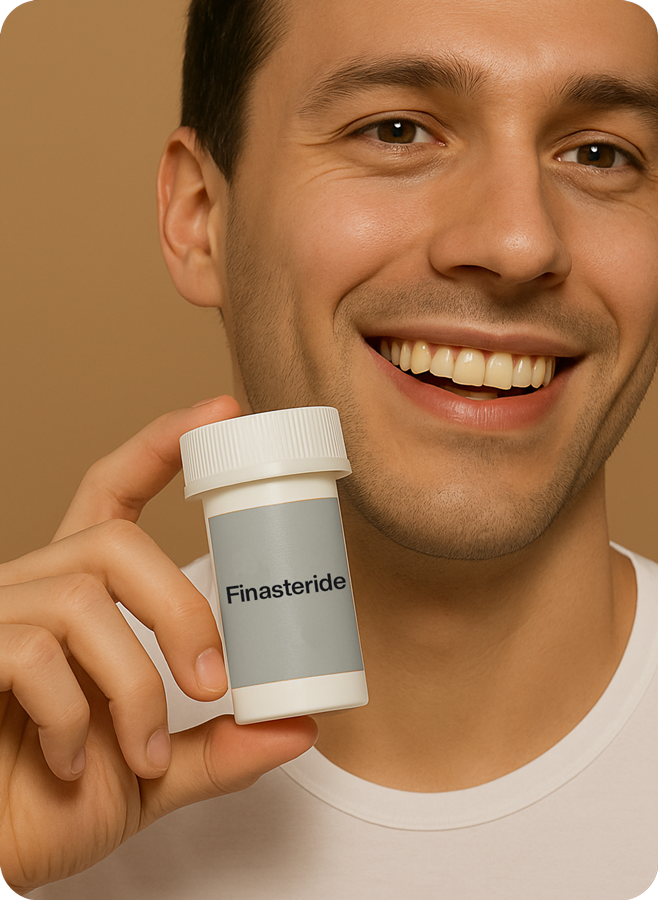
Why use Finasteride
Finasteride stands as the cornerstone of modern hair loss treatment for men, offering something that few other options can claim: the ability to actually stop hair loss at its source. By targeting DHT (dihydrotestosterone), the hormone primarily responsible for shrinking hair follicles, finasteride addresses the root cause of male pattern baldness rather than just treating symptoms. This powerful DHT blocker reduces levels of this hormone by approximately 70% in the scalp, effectively halting the miniaturization process that leads to thinning hair and baldness. For most men, this translates to not just maintaining current hair, but often experiencing noticeable regrowth, particularly in the crown and mid-scalp areas.
What truly sets finasteride apart is its impressive track record of long-term effectiveness and convenience. With just one small pill daily, you’re providing continuous protection for your hair follicles around the clock. Clinical studies demonstrate that over 80% of men maintain or increase their hair count after five years of treatment—results that few other non-surgical options can match.
When combined with minoxidil in a comprehensive treatment plan, the results can be even more dramatic. At CityHealth, we’ve seen countless patients transform their hairlines and their confidence with this simple yet powerful medication. The sooner you begin treatment, the more hair you can preserve and potentially regrow, making finasteride an investment in both your current and future appearance.
Advantages of Finasteride
FDA-Approved
The only FDA-approved oral medication specifically for male pattern hair loss, with over 25 years of clinical data supporting its safety and effectiveness.
Proven Results
Studies show that 83% of men maintain or increase their hair count after 5 years of treatment, with the best results in the crown and mid-scalp regions.
Works While You Sleep
Finasteride blocks DHT production 24/7, protecting your hair follicles around the clock with just one daily pill—no messy applications or time-consuming treatments.
No Downtime
Unlike surgical procedures, finasteride requires no recovery time or lifestyle adjustments—simply take your pill and continue with your day as normal.
Affordable Solution
A cost-effective approach to hair retention that costs significantly less than transplants or other advanced procedures, with generic options making it even more accessible.
Preventative Power
The earlier you start, the more hair you save—finasteride is most effective when begun at the first signs of thinning, preserving your existing hair for years to come.
The Power of Combination Therapy
When it comes to achieving optimal hair restoration results, the combination of finasteride and minoxidil creates a powerful synergistic effect that neither medication can accomplish alone. This dual-action approach targets hair loss from multiple angles
Finasteride works internally by blocking DHT, the hormone responsible for miniaturizing hair follicles. By reducing DHT levels by approximately 70% in the scalp, finasteride effectively stops the underlying cause of male pattern baldness. Meanwhile, minoxidil works externally by increasing blood flow to the scalp, extending the growth phase of hair follicles, and stimulating dormant follicles to produce new hair.
Clinical studies demonstrate that men using both medications experience significantly better outcomes than those using either treatment alone:
- Up to 94% of men using combination therapy maintained or increased their hair count, compared to 80-83% using finasteride alone
- Visible regrowth occurs more quickly, often within 3-4 months rather than 6+ months with single-therapy approaches
- The density and thickness of regrown hair is notably improved with combination treatment
- Areas resistant to single-therapy treatment often respond to the dual approach
At CityHealth, we frequently recommend this comprehensive strategy for patients seeking maximum results. Our providers can customize your treatment plan based on your specific hair loss pattern, treatment goals, and medical history. The convenience of managing both medications through our telemedicine platform makes this powerful combination approach simple to maintain for the long term.

Common questions
Most men begin to see results from finasteride after 3-6 months of consistent daily use. The first noticeable change is typically a decrease in hair shedding, followed by thickening of existing hair and potential regrowth. Maximum results are usually visible after 12 months of treatment, though continued use is necessary to maintain these benefits.
Finasteride is specifically FDA-approved for male pattern baldness (androgenetic alopecia) and works best for hair loss at the crown and mid-scalp areas. It’s not effective for other types of hair loss such as alopecia areata, telogen effluvium, or hair loss due to scarring. During your CityHealth consultation, our providers will determine if your hair loss is the type that responds to finasteride.
Most men tolerate finasteride well, with less than 4% experiencing side effects. The most commonly reported side effects include decreased libido, erectile dysfunction, and decreased ejaculate volume. These effects are typically mild and often resolve while continuing treatment or after discontinuation. More serious side effects are rare, and your CityHealth provider will discuss all potential risks during your consultation.
Yes, finasteride is often most effective when used as part of a comprehensive treatment plan. Many patients see enhanced results when combining finasteride with minoxidil, as these medications work through different mechanisms—finasteride blocks DHT production while minoxidil stimulates growth. Your CityHealth provider can create a personalized combination approach based on your specific needs.
If you discontinue finasteride, the DHT-blocking effects will gradually diminish, and hair loss will typically resume within 6-12 months. Any hair maintained or regrown while on finasteride may be lost once treatment stops. This is why finasteride is generally considered a long-term treatment for those who wish to maintain their results. Before starting, it’s important to understand this commitment aspect of the medication.